Masai Mara great migration: best months and how to plan
When the herds arrive, where to stay and why migration safaris need booking from April.
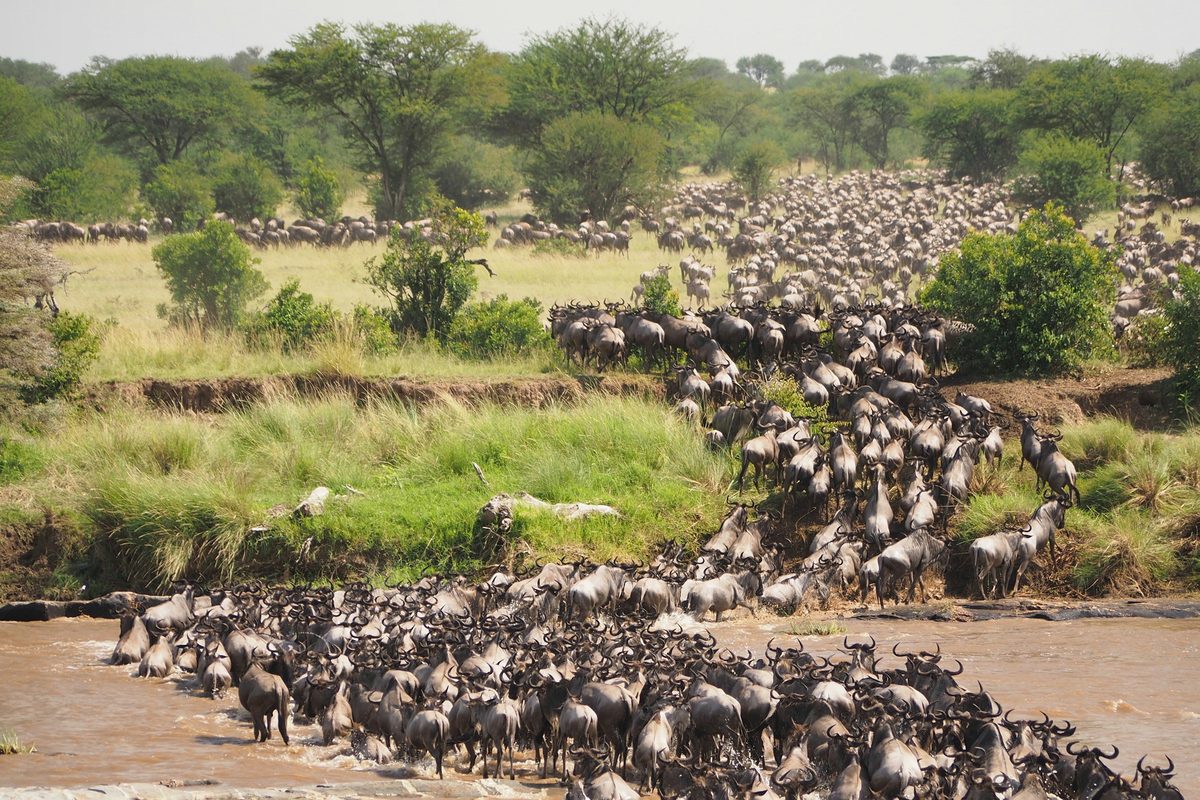
Masai Mara searches from India have more than doubled in three years, and the great migration is the reason. Every year, around two million wildebeest, zebra and gazelle follow the rains in a vast circle through Tanzania's Serengeti and Kenya's Masai Mara. From around July to October the herds are in the Mara, and the river crossings, with crocodiles waiting and predators close behind, are one of the greatest wildlife spectacles on earth.
Here's when to go, where to stay, what a typical safari looks like and why you should book early.
When to go
| Months | What happens |
|---|---|
| July | The first herds arrive from the Serengeti |
| August to September | Peak migration; river crossings most likely |
| October | Herds begin moving south again |
| November to December | Short rains; green landscapes and lower prices |
| January to March | Dry, excellent for resident wildlife, fewer vehicles |
| April to May | Long rains; some camps close |
The exact timing depends on the rains each year, and crossings can't be guaranteed on a particular day. Three nights in the Mara gives you the best chance. Even without a crossing, the Mara's resident lions, leopards, cheetahs, elephants and giraffes make every game drive memorable.
Where to stay
- Inside the National Reserve: lodges and camps closest to the action; game drives start immediately.
- Private conservancies: bordering the reserve, with fewer vehicles, walking safaris and night drives that aren't allowed inside.
- Near the Mara River: the best location for crossings; these camps book out first.
Accommodation ranges from comfortable lodges to luxurious tented camps with private decks overlooking the plains. Most include all meals and two game drives a day.
A typical safari
- Nairobi (1 night): arrival, and the Giraffe Centre or the elephant orphanage
- Masai Mara (3 nights): morning and evening game drives, and an optional hot-air balloon at dawn
- Lake Nakuru or Lake Naivasha (1 night): flamingos, rhino and a boat ride
- Amboseli (2 nights): elephants below Kilimanjaro
Seven to eight nights is ideal. Travel by road (scenic but long) or by short flights into the Mara airstrips, which save time and are worth considering.
The hot-air balloon
Floating over the Mara at sunrise, followed by a champagne bush breakfast, is the highlight of many trips. It costs extra and books out in peak season, so reserve it with the safari.
Getting there from India
Flights to Nairobi connect from Mumbai and through the Gulf from every South Indian city, with journeys of six to ten hours. Kenya is two and a half hours behind India.
The travel authorisation
Kenya now uses an Electronic Travel Authorisation (eTA) instead of a visa. It's applied for online and is usually approved within three working days; we recommend applying at least two weeks before travel. We apply for it with your booking.
Health
- Yellow fever: check the current certificate requirements for Kenya and for your return to India. India requires proof of yellow fever vaccination from travellers arriving from countries with a risk of transmission.
- Malaria: ask your doctor about prevention for the regions you'll visit.
- Insurance: travel insurance with medical evacuation cover is essential.
What to pack
- Neutral-coloured clothes (khaki, olive, beige); avoid bright colours and dark blue
- Layers: mornings on game drives are cold
- A hat, sunglasses and sunscreen
- Binoculars and a camera with a zoom lens
- Soft-sided bags; light aircraft have strict luggage limits
Food
Camps serve excellent food, and most will prepare vegetarian and Indian dishes on request. Nairobi has many Indian restaurants. Tell us your preferences and we'll inform every lodge.
What it costs
Safari prices are driven by the camp, the season and the park fees, which are charged per person per day and are highest in the migration season. Flying into the Mara costs more than driving but saves two long road days. A Kenya safari is more expensive than a Southeast Asian holiday, but it's a once-in-a-lifetime experience.
When to book
From April for July to October travel. Searches peak in May and June, and the best camps near the river book out months in advance, especially for August.
See Kenya safari packages and festival and event tours.
Questions, answered
What is the best month to see the great migration in the Masai Mara?
August and September, when river crossings are most likely. The herds are usually in the Mara from July to October.
How many days do I need for a Masai Mara safari?
Three nights in the Mara is the minimum for the migration. A seven to eight-night trip adds Nairobi, Lake Nakuru and Amboseli.
Do Indians need a visa for Kenya?
Kenya uses an Electronic Travel Authorisation (eTA) instead of a visa. Apply online at least two weeks before travel; we do it with your booking.
Is a Kenya safari suitable for children and elders?
Yes, with the right camps and pace. Some camps have minimum ages for walking safaris, and flying into the Mara avoids long road journeys.
Is vegetarian food available on safari?
Yes. Camps and lodges prepare vegetarian and Indian dishes on request, and Nairobi has many Indian restaurants.
Related
Published by Airtravel Enterprises · More articles and guides